Introduction
Priya loves rearranging her room every few months. She spends hours picking fabric swatches, testing paint colours, and rethinking furniture layouts. Now she's applying to design school and stuck on one question: should she study Interior Design or Interior Architecture?
It's not a trivial choice. The path she picks will shape her projects, her technical training, and the kind of clients she works with for years.
Both fields overlap in creativity and space-planning skills. But they diverge sharply once you look at technical scope and career outcomes.
India's interior design market alone was valued at USD 32.1 billion in 2023 and is projected to hit USD 81.2 billion by 2030, according to P&S Intelligence's market analysis. That growth is creating real career options, but only if students understand which discipline actually fits their strengths.
This blog breaks down exactly where these two fields split.
Key Takeaways
- Interior Design shapes aesthetics, furnishings, and mood within existing walls.
- Structural layout, circulation, and building systems fall under Interior Architecture's scope.
- Both need creativity, but Interior Architecture demands deeper code and engineering knowledge.
- Career choice hinges on whether you prefer styling spaces or restructuring them.
Interior Design vs Interior Architecture: Quick Comparison
Here's the side-by-side breakdown students ask for most:
| Factor | Interior Design | Interior Architecture |
|---|---|---|
| Primary Focus | Aesthetics, furniture, colour, materials, mood | Structural layout, circulation, building systems |
| Scope of Work | Styling and space planning within existing walls | Wall reconfiguration, adaptive reuse, technical drawings |
| Core Skills | Colour theory, styling, client communication, SketchUp, Photoshop | AutoCAD, Revit, BIM, building codes, structural awareness |
| Education (India) | Bachelor's or Diploma in Interior Design | Degrees blending architecture fundamentals with interior planning |
| Typical Roles | Residential/commercial designer, stylist, consultant | Interior architect, adaptive-reuse specialist |
Software tools no longer draw a clean line between the two fields. Programs like AutoCAD, Revit, SketchUp, and Photoshop all show up in Interior Design curricula today, not just Interior Architecture ones. The real difference lies in how those tools get used: technical construction documentation versus visual presentation.
What is Interior Design?
Interior Design is the discipline of shaping how a space feels and functions using colour, furniture, lighting, and materials. It's the art of translating a client's lifestyle or a brand's identity into a liveable, usable environment.
Designers work within an existing architectural shell. They don't move load-bearing walls or redesign plumbing systems. Instead, they focus on:
- Space planning within fixed boundaries
- Mood-boarding to establish visual direction
- Material and finish selection for durability and style
- Client collaboration to align design choices with lifestyle or brand goals
The Council for Interior Design Qualification describes this as a distinct profession applying specialised knowledge to promote health, safety, and welfare, not just decoration.
Specializations Within Interior Design
Most designers eventually pick a lane:
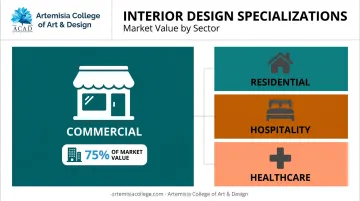
- Residential design for homes and apartments
- Commercial design for offices and retail spaces
- Hospitality design for hotels and restaurants
- Healthcare design for clinics and hospitals
Commercial work now drives roughly 75% of India's interior design market value, making it the fastest-growing segment according to P&S Intelligence's report.
Use Cases of Interior Design
Real-world Interior Design work looks like:
- Home renovations focused on layout flow and finishes
- Retail store makeovers built around brand identity
- Hotel interiors designed for guest experience
- Office redesigns that balance productivity and aesthetics
Companies like HomeLane, Livspace, and Bonito Designs have built entire business models around this client-facing, styling-heavy work. These firms hire design-school graduates specifically for their eye for materials, furniture, and space arrangement, not structural engineering.
What is Interior Architecture?
Interior Architecture goes a layer deeper. It reshapes the structure, flow, and technical systems inside a building, often through renovation or adaptive reuse.
Interior Architects decide where a wall should go, how air should circulate, and where wiring and plumbing need to run — decisions far removed from picking a sofa fabric. They typically get involved early in a project, working alongside architects and structural engineers on:
- Load-bearing changes and structural reconfiguration
- Ventilation and mechanical system integration
- Building code compliance and accessibility
- Lighting and electrical planning from the ground up
The Sustainability Angle
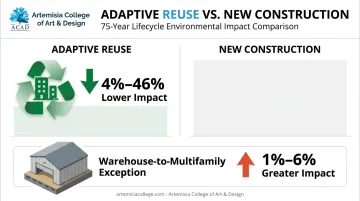
Adaptive reuse, converting old buildings into new functional spaces, has real environmental payoff. A life-cycle study by the National Trust for Historic Preservation found that reusing existing buildings produced 4% to 46% lower environmental impacts than comparable new construction over a 75-year span.
That said, the benefit isn't universal. The same study found a warehouse-to-multifamily conversion actually produced 1% to 6% greater impacts in two categories, due to the sheer volume of new materials required. Adaptive reuse works best when the existing structure genuinely fits the new purpose.
Use Cases of Interior Architecture
Typical Interior Architecture projects include:
- Converting heritage buildings into modern office spaces
- Redesigning hospitals or museums where structural changes are unavoidable
- Retrofitting schools for updated safety and accessibility codes
Professionals trained in this discipline usually lead large-scale renovation projects rather than purely decorative assignments. They're the ones in the room when engineers discuss load calculations, not just paint palettes.
Interior Design vs Interior Architecture: Which Path Should You Choose?
There's no universally "better" option here. The right fit depends on what genuinely interests you.
Ask yourself:
- Do I enjoy solving structural or technical puzzles, or do I get excited about textures, colour palettes, and furniture arrangements?
- Am I willing to study building codes and construction documentation in depth?
- Do I want to work closely with clients on lifestyle and mood, or with engineers on load-bearing decisions?
| You're Drawn To | Choose |
|---|---|
| Colour, furniture, and creating experiences within existing spaces | Interior Design |
| Reshaping how a space functions at a structural level | Interior Architecture |
For most Indian design aspirants, program availability and timeline matter too. Interior Design programs are widely available across the country and offer a faster route into residential and commercial design careers.
Interior Architecture, on the other hand, often requires an architecture-adjacent degree with a longer, more technical curriculum.
A strong, industry-integrated Interior Design program can bridge this gap effectively. At Artemisia College of Art & Design, students build portfolios, develop styling expertise, and receive placement support that prepares them to enter the field confidently, without needing a full architecture degree first.
Many professionals eventually blend both skill sets as their careers progress. But starting with a clear focus, rather than trying to master everything at once, builds a stronger foundation for career growth.
Real-World Career Outcomes
The placement landscape for Interior Design graduates in India is active and growing. Leading firms like Livspace, HomeLane, Godrej Interiors, and Urban Ladder Interiors regularly hire design-school graduates for styling, space-planning, and client-facing roles.
A real example: Suhana Suryavanshi, from Artemisia's B.Des Interior Design batch (2021–25), landed a role as an Interior Designer at Livspace's Ahmedabad office. She credits the communication confidence she built during placement preparation, especially for interviews, as key to her success.
This kind of outcome doesn't happen by accident. A dedicated placement cell matters:
- Portfolio finalization to showcase the right projects to recruiters
- Mock interviews to build client-facing confidence
- Company coordination to connect students directly with hiring firms

Students who clarify their strengths early (styling-focused interior design versus the more technical, code-driven work of interior architecture) and choose a program with genuine placement support are far better positioned for a smooth transition from classroom to career.
If you're exploring this path, Artemisia College's Interior Design program pairs curriculum with a placement ecosystem built for exactly this transition.
Conclusion
Neither Interior Design nor Interior Architecture is inherently the "better" choice. It comes down to whether you're pulled toward aesthetics and client experience or toward structural, technical space-making.
What matters more than the label is clarity. Students who choose their path early build stronger portfolios, deeper technical skills, and an easier transition into the industry, regardless of which discipline they pick. Artemisia College's Interior Design programs and placement cell help students build that clarity early, guiding them from portfolio development to studio placements.
About Artemisia College of Art & Design
Whichever of the two you choose, the technical grounding is the same and it has to be taught. Artemisia College of Art & Design is run under Tryambakam Education Foundation and was started to build a job-oriented degree college offering high quality art and design education at low cost. Around 90% of the faculty come from the animation, game, interior design and fashion industries, with five to thirty-five years of experience behind them.
Interior design runs at three levels: the Certificate in Interior Design, the Diploma in Interior Design and the four-year B.Design in Interior Design. The college also awards B.Design degrees in Animation, Game Design and Fashion Design, BFA and MFA routes in Painting and Sculpture, and a Certificate in Photography.
Tuition is kept low compared with similar programmes elsewhere and scholarships are offered to bright and needy students. You can check the current fee structure or apply through early admission if you would rather submit a portfolio than sit an entrance test.
Frequently Asked Questions
Which is better, architecture or interior design?
"Better" depends on your interests. Architecture and Interior Architecture suit those drawn to structural, technical problem-solving. Interior Design suits those focused on aesthetics and client experience. Both offer strong, distinct career paths.
What is the main difference between interior design and interior architecture?
Interior Design focuses on aesthetics, furnishings, and atmosphere within an existing structure. Interior Architecture focuses on structural reconfiguration and technical space planning, often before walls are even finalized.
Can an interior designer become an interior architect?
Transitioning typically requires additional technical or architectural training, particularly in structural systems and building codes. Skills like space planning and design software do carry over.
Which field has better career opportunities in India?
Interior Design has a broader, more accessible job market in India, driven by rising residential and commercial renovation demand. Interior Architecture roles exist but are more specialized and require deeper technical qualifications.
Do interior designers need to know construction and building codes?
Yes, working knowledge of codes and safety standards is expected. However, interior designers aren't required to alter load-bearing structures—that falls under Interior Architecture and structural engineering.
What skills should I develop before choosing between the two fields?
Try exploring both colour/material styling and basic space planning or technical drawing early, through coursework or internships. This helps you identify genuine interest before committing to a specialization.