
Introduction
Interior design used to mean picking paint colours and matching curtains to sofas. That's not the job anymore.
Today's designers juggle sustainability audits, smart home wiring diagrams, and VR walkthroughs before a client signs off on a single room. Many homeowners and business owners struggle to keep pace, unsure which technologies are worth the investment and which trends will actually stick.
India's interior design market is projected to grow from USD 31.43 billion in 2025 to USD 65.01 billion by 2031, according to Mordor Intelligence's industry analysis. That growth is pulling in new technology, new client expectations, and new career paths.
This article breaks down the trends reshaping the field, what's driving them, and what they mean if you're a homeowner, a business, or someone considering a career in design.
Key Takeaways
- Sustainability, IoT, and AI-driven visualisation are now standard client expectations.
- Wellness-focused and accessible design now shape briefs for homes and commercial spaces.
- Technology speeds up design work, but human judgement still guides the outcome.
- India's urban growth and rising middle-class housing demand are fuelling industry expansion.
- Industry-integrated design education is now the deciding factor for long-term career success.
Key Trends Shaping the Future of Interior Design
Five trends are converging right now, driven by three forces: technology, sustainability, and human wellbeing. Together, they're rewriting what clients expect from a design brief.
Sustainable and Eco-Conscious Design
Clients aren't just asking for "eco-friendly" anymore. They want proof.
- Natural, reclaimed, and low-VOC materials are replacing synthetic finishes in both residential and commercial fit-outs
- Green certifications like LEED and IGBC are shifting from optional badges to procurement requirements
- Energy-efficient lighting and HVAC systems are built into layouts from day one, not retrofitted later
The scale is real. GBCI recorded 370 LEED-certified projects across India in 2024, covering over 8.5 million square metres, with 102 of those specifically Interior Design and Construction certifications. Companies like Synopsys India and Microsoft India have already secured LEED Platinum ratings for their interior fit-outs, proving this isn't a niche pursuit reserved for flagship green buildings.
Smart Homes and IoT-Integrated Interiors
Home automation used to be an add-on. Now designers plan for it from the first floor sketch.
Lighting, climate control, and security systems get mapped into the layout before construction begins. This avoids the messy retrofits of a decade ago, where wires got chased through finished walls after the fact.
Indian brands have made this shift accessible. Schneider Electric's Wiser retrofit system, for instance, installs in under four hours without wall damage, controlling lights, curtains, ACs, and geysers through a single app. Industry data shows security automation and lighting control together account for 84% of the home-automation features clients ask designers to integrate.

AI, AR/VR, and Digital Visualization Tools
Client approvals used to take weeks. Now they take a walkthrough.
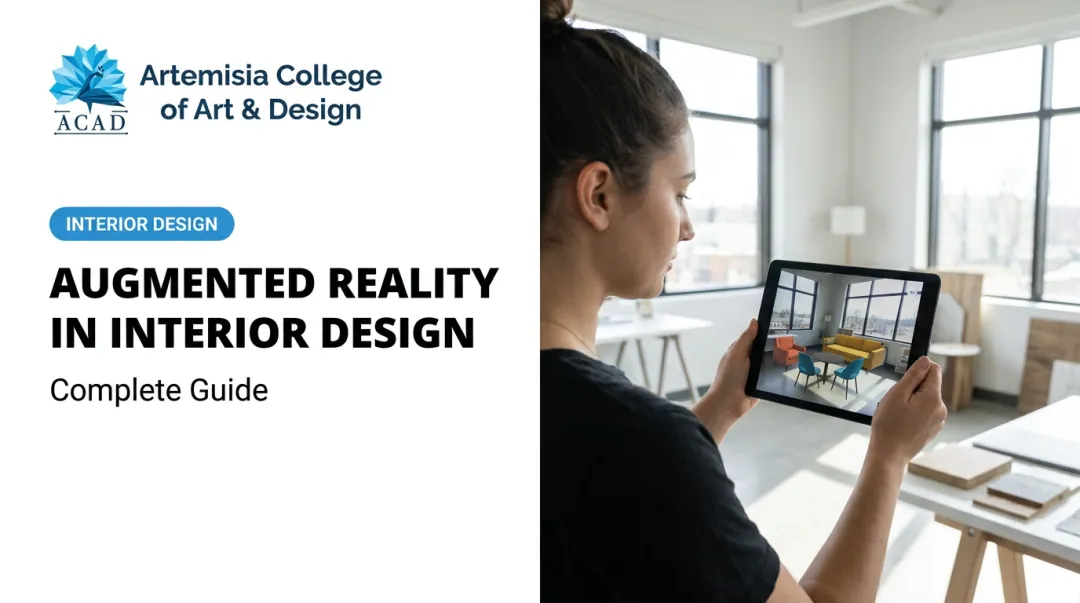
AI-assisted space planning tools generate multiple layout options in minutes. Virtual reality walkthroughs let clients "stand" in a room before a single brick is laid, cutting the costly mid-project change orders that used to eat into margins.
- Generative design tools like Autodesk's Smart Blocks propose layout variations based on constraints designers set
- VR walkthroughs reduce miscommunication between designer intent and client expectation
- 3D printing enables rapid prototyping of custom furniture, with recent research demonstrating full-scale customisable furniture prototypes built directly from parametric digital models
None of this replaces the designer's eye. It just removes the guesswork from the approval process.
Wellness-Centric and Biophilic Design
Air quality, natural light, and greenery aren't decorative choices anymore. They're brief requirements.
Healthy building standards are reshaping how spaces get designed. The International WELL Building Institute reports that occupants of WELL Certified spaces show 28% higher workplace satisfaction and a 10-point productivity increase compared to non-certified spaces.
Embassy REIT's office portfolio in India illustrates the scale of adoption, with 183 WELL achievements across 90 evaluated buildings and 48 reaching WELL Gold status. That scale confirms this is now a mainstream commercial strategy across corporate India, not a one-off pilot.
Hyper-Personalization and Adaptive, Multi-Functional Spaces
Homes need to do more with the same square footage. Indian flat sizes have actually grown, not shrunk, rising 34% across top cities between 2019 and 2024. But the demand for flexibility hasn't dropped.
- Remote and hybrid work push clients to request dedicated, adaptable workspaces within homes
- Multi-generational households need layouts that flex between privacy and shared living
- Accessible design features, like zero-step entries, wider circulation paths, and adjustable-height counters, are becoming standard rather than specialist requests
India's Ministry of Housing guidelines now mandate minimum circulation clearances and reachable controls in accessible design projects, a sign that universal design is moving from optional to expected.
What's Driving These Interior Design Trends
A mix of technology, economics, and shifting consumer behaviour is pushing this transformation faster than most designers anticipated.
Four forces stand out:
- Technology is lowering the entry barrier: AI, IoT platforms, and immersive visualisation tools that once required specialist teams are now accessible to independent designers and small firms.
- Urbanisation is changing what clients want: smaller commercial footprints, hybrid work arrangements, and demand for move-in-ready spaces are reshaping standard briefs across Indian cities.
- Cost pressures are pushing efficiency: digital planning tools reduce material waste and rework, which matters when margins are tight and clients expect faster turnarounds.
- Global exposure is raising the bar: social media and international design events mean a homeowner in a tier-2 Indian city sees the same Pinterest boards as a client in Milan, and expects comparable sophistication.

These forces combine into real market momentum: India's interior design sector is set to more than double by 2031, per Mordor Intelligence's projections. That growth isn't hypothetical. It's already reshaping how firms hire, train, and structure their services.
How These Trends Are Impacting the Interior Design Industry
These shifts reach far beyond aesthetics, reshaping workflows, business models, and the skills firms look for when hiring.
Operational Impact
Digital tools are compressing timelines that used to stretch for months.
- 3D modelling software cuts down on revision cycles by letting clients visualise changes instantly
- Project management platforms centralise vendor coordination, procurement, and site updates
- Fewer physical mock-ups mean faster material sourcing decisions
Business Impact
Beyond faster workflows, new revenue streams are emerging alongside traditional project fees.
- E-design services let firms offer remote design packages to clients outside their immediate service area
- Sustainability consulting has become a standalone offering, separate from the actual design and build work
- Subscription-based design support keeps clients engaged for ongoing tweaks rather than one-off projects
Workforce Impact
These new business models are also reshaping hiring. Firms are actively hiring for skills that didn't exist in most design curricula a decade ago.
Digital fluency and sustainability knowledge are now baseline hiring criteria, not bonus qualifications.
India's official Interior Design and Decoration curriculum, revised in 2022, now mandates training in AutoCAD, SketchUp, 3ds Max with V-Ray, and Lumion. The National Qualifications Register classifies interior design as a Future Skills qualification — formal recognition that the role is evolving faster than most job descriptions can keep up.
At Artemisia College, our Interior Design curriculum already builds around these same tools, giving students hands-on experience with the software firms now expect on day one.
Future Outlook and Career Opportunities in Interior Design
The next 1-3 years will likely separate designers who adapt from those who fall behind.
Watch for generative AI co-design tools moving from novelty to standard practice. What's currently a differentiator, an AI tool that proposes layout options, will soon be table stakes for any firm competing on speed.
Technologies worth tracking:
- Parametric design software that adjusts entire layouts based on single input changes
- AI-driven material sourcing that matches sustainability requirements to available suppliers
- Immersive client presentation tools that go beyond static VR walkthroughs into real-time collaborative editing
For India specifically, expect rising demand for designers who specialise in hospitality, healthcare, and accessible housing as urban development accelerates. India's older population, projected to rise from 149 million in 2022 to 347 million by 2050, is driving demand for age-friendly interiors.
This is exactly why formal, industry-integrated education matters more now than it did five years ago. A general design degree without hands-on software training or real placement support leaves graduates guessing at what firms actually need.
Artemisia College of Art & Design structures its Interior Design programs around this reality. Students train on AutoCAD, SketchUp, 3ds Max, and Photoshop, the same tools firms expect graduates to know on day one.
The college's dedicated Placement Cell connects students directly with hiring firms like HomeLane, Livspace, Godrej Interiors, Bonito Designs, and Studio Lotus, handling everything from portfolio finalisation to mock interviews and offer negotiation.

Graduates like Muskan Gupta and Suhana Suryavanshi, placed at Livspace, and Dhyutika Waiker, placed at VIMA - The Dimension, reflect what this support looks like in practice.
Fresher salaries in Indian interior design roles typically range from ₹30,000 to ₹40,000 per month. The Placement Cell's guidance on offer evaluation helps graduates negotiate from an informed position instead of accepting the first offer.
Preparing for a Field That Keeps Moving
Every trend above shares a requirement: a designer who can absorb new tools and expectations without losing the fundamentals underneath them. Visualisation software changes; proportion, materials, light and human comfort do not.
That is an argument for depth rather than currency. A designer grounded in construction, services and anthropometrics can learn whatever renders next year. One trained only on today's software has to start over each time it shifts.
Artemisia College of Art & Design teaches with that priority, building fundamentals first so students work as designers rather than as software operators. The four-year B.Design carries AutoCAD and SketchUp into 3DS Max and Revit, runs five studios from residential to public spaces, and closes with estimation and costing, project management, acoustics and sustainable design. Around 90% of the faculty come from working industry.
Conclusion
The tools will keep changing. The designers who stay employable are the ones whose understanding sits underneath the tools rather than inside them.
Artemisia College offers interior design at three levels: the one-year Certificate, the two-year Diploma, and the four-year B.Design in Interior Design. Certificate and Diploma entry is direct with 10+2 in any stream; the degree is through the ACAD Entrance Test or portfolio-based early admission.
Frequently Asked Questions
Do interior designers have a future?
Yes. India's urbanisation, renovation demand, and growing awareness of design's role in wellbeing are driving strong growth, with the market projected to more than double by 2031.
Will AI replace interior designers?
No. AI speeds up visualisation and layout generation, but it can't replace human creativity, client empathy, or the contextual judgement needed to interpret a client's actual needs.
What are 2026 interior design trends?
Expect sustainable materials and green certifications, AI-assisted space planning, wellness-focused layouts, and adaptive multi-functional spaces to dominate briefs across residential and commercial projects.
What skills will future interior designers need?
Fluency in digital tools like AutoCAD and 3D rendering software, working knowledge of sustainability standards, and strong client communication skills will separate competitive designers from the rest.
Is interior design a good career choice in India?
Yes. Rising demand for skilled, industry-ready designers across residential, commercial, and hospitality projects makes this a strong long-term career path with room for specialisation.
How is technology changing interior design education?
Design schools are integrating software training, AI tools, and industry mentorship directly into their curricula, so graduates arrive job-ready with the tools firms use daily.