2D animation gets praised as "engaging" and "cost-effective" in almost every marketing blog. But those words don't mean much until you connect them to numbers you actually track: conversion rates, support ticket volume, onboarding time, campaign turnaround.
This article breaks down what 2D animation actually does for a business bottom line, regardless of industry or company size.
TL;DR
- 2D animation delivers illustration-based storytelling for explainers, marketing, training, and branding
- Core advantages: lower cost, faster turnaround, simplified communication, and strong cross-platform performance
- Skipping it or executing it poorly leads to inconsistent messaging and weaker engagement
- Real ROI comes from consistent use, performance tracking, and working with skilled animators
What Is 2D Animation (Brief Context)
2D animation creates movement and storytelling using flat, two-dimensional artwork, meaning height and width only, with no depth or 3D modelling involved.
In a business setting, you'll typically see it powering:
- Explainer videos for products or services
- Social media content and ads
- Brand mascots and animated logos
- Onboarding tutorials and employee training modules
- Whiteboard-style videos for sales presentations
In business, 2D animation works as a communication tool, not fine art. Its job is to generate leads, simplify a message, or build brand recall, not to win design awards.
Key Advantages of 2D Animation for Business
The advantages below focus on outcomes businesses already measure: production budget, campaign turnaround, message retention, and conversion rate. Each ties directly to a KPI your team is probably tracking right now, whether that's cost-per-asset or onboarding completion rates.
Lower Production Cost and Faster Turnaround
2D animation skips the modelling, texturing, rigging, and rendering stages that 3D production requires. That simpler workflow means fewer people involved, quicker revisions, and lower costs for startups and small-to-medium businesses producing content regularly.
According to Vidico's 2026 animation pricing guide, a 60-second 2D character animation typically runs $5,000 to $15,000 USD, compared to $10,000 to $25,000 USD for the equivalent 3D piece. Vidico also recommends planning 4-6 weeks ahead for a custom animation project; rushing delivery under two weeks can add 25% to 50% to the cost.
Why this matters for planning:
- Lower per-video costs let you test more messaging variations before committing to a big campaign
- Faster cycles mean you can respond to market shifts without waiting months for new creative
- Revisions are simpler because you're not rebuilding a physical shoot or a 3D scene
KPIs impacted: production cost per asset, time-to-launch, number of content iterations you can afford to test.
Startups running high-volume marketing feel this benefit most, alongside any business that needs frequent content refreshes on a tight budget.
Simplifies Complex Ideas and Improves Retention
Combining illustration, motion, and narration helps break down technical or abstract concepts, the kind that lose people the moment you try to explain them in text alone.
This shows up constantly in:
- SaaS onboarding flows that need to explain a dashboard in under 90 seconds
- Healthcare explainers walking patients through a procedure or diagnosis
- Financial product walkthroughs simplifying interest rates or investment terms
- Employee training modules covering compliance or new software
A 2026 systematic review published in PMC covering 88 clinical trials and 37,900 participants found that video animation improved knowledge outcomes in roughly half of the trials studied, with mixed results in the rest. That's a fair, honest takeaway: animation helps communication, but it isn't automatic. Script quality and audience fit matter as much as the animation itself.
KPIs impacted: customer support ticket volume, onboarding completion rate, comprehension or recall scores.
This advantage matters most when you're explaining a technical product, a regulatory process, or a multi-step workflow to people who aren't experts in your field.
Strong Performance Across Marketing and Brand-Building
2D animation's flexibility lets brands build custom mascots, icons, and visual identities that don't disappear after one campaign. A single character or visual style can be repurposed across dozens of touchpoints.
Businesses commonly stretch 2D assets into:
- Social media posts and short-form video ads
- Sales presentations and pitch decks
- Website graphics and landing pages
- Email marketing visuals
That repurposing is where the real ROI lives. Instead of paying for a new shoot every quarter, one animated brand asset gets reused, resized, and re-edited across formats. Consistent visual identity builds recognition faster than a scattered mix of stock photos and static graphics, because audiences start associating a specific look and motion style with your brand.
KPIs impacted: engagement rate, click-through rate, brand recall, content repurposing efficiency.
This matters most during brand awareness campaigns, A/B testing of marketing messages, and any phase where a business is trying to establish a distinct visual identity in a crowded market.
What Happens When 2D Animation Is Missing or Poorly Executed
Skipping quality 2D animation, or settling for a rushed, poorly scripted version, has real costs down the line:
- Inconsistent brand messaging across platforms when every piece of content looks and feels different
- Higher long-term production costs from repeated live-action reshoots every time a message needs updating
- Longer sales or onboarding cycles because prospects and new hires struggle to grasp unclear product explanations
- Weaker audience engagement and lower shareability compared to visually consistent competitors
- Difficulty scaling content as the business grows and marketing or training demands multiply
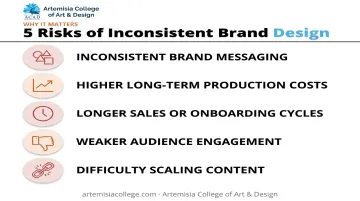
None of these show up as a single dramatic failure. They accumulate quietly, showing up as slightly higher support costs here, a slightly longer sales cycle there, until the gap becomes obvious against competitors who invested early.
How to Get the Most Value from 2D Animation
2D animation delivers its strongest returns when it's woven into the customer journey consistently, not dropped in as a one-off explainer video and forgotten.
A few practices separate businesses that get real ROI from those that don't:
- Track performance, not assumptions. Monitor views, engagement, and conversion rates, then refine scripts and visuals based on what the data shows.
- Use it across multiple touchpoints. Onboarding, marketing, training, and sales support all benefit from the same visual language.
- Invest in skilled talent. Untrained animators produce weak storytelling and wasted budget, while skilled ones create content that actually converts.
That last point is where a lot of businesses get stuck: finding animators who can translate a business brief into something visually effective, not just technically competent.
This is where institutions matter. Artemisia College of Art & Design trains 2D animation talent through its Certificate in 2D & 3D Animation and Diploma in Animation programmes. Students learn foundational skills like sketching and lightbox animation principles, then progress to industry-standard digital animation software.
They also get hands-on exposure through the college's in-house animation production studio, working on live projects before graduating.
For businesses building out content pipelines, this kind of talent pool is worth exploring, whether through direct hiring, internships, or campus placement partnerships.
Conclusion
The real value of 2D animation comes from the combination of cost-efficiency, clarity, and consistent brand recall that compounds every time you use it well.
Businesses that treat animation as a one-off expense typically see limited, short-lived returns. Those that use it strategically, tracking performance and refining based on real data, see the advantages build over years, not months.
As demand for skilled 2D animators keeps growing, partnering with talent trained by industry-integrated institutions like Artemisia College gives businesses a practical way to access that skill without starting from scratch.
Frequently Asked Questions
What are the advantages of 2D animation?
2D animation offers lower production costs, faster turnaround than 3D or live-action, and simplified messaging for complex ideas. It also performs well across marketing channels thanks to reusable, consistent visual branding.
How much does 2D animation cost for a business?
Costs vary by complexity and length, but a 60-second character animation typically runs ₹4,00,000 to ₹12,00,000, generally cheaper than comparable 3D production. Simpler explainer-style videos can cost less.
Is 2D animation better than 3D animation for marketing?
It depends on your goal. 2D suits budget-friendly, fast-turnaround storytelling, while 3D works better for realistic product visualisation. Neither is universally "better."
What industries benefit most from 2D animation?
SaaS, healthcare, finance, education, and e-commerce businesses commonly use 2D animation to explain products, processes, or services clearly to non-expert audiences.
How long does it take to produce a 2D animated video?
Turnaround depends on length and complexity, but industry guidance suggests planning 4-6 weeks for a custom project. This is typically faster than comparable live-action or 3D production.
Where can businesses find skilled 2D animators to bring these benefits to life?
Businesses can hire freelancers, work with agencies, or connect with institutions like Artemisia College, which trains industry-ready 2D animation talent through hands-on curriculum and placement support.