Introduction
Every creative student hits the same fork in the road after Class 12: do you want to shape how people look, or how spaces feel? Fashion design and interior design both answer that pull toward visual creativity, but they lead to different daily work.
Both fields are growing fast in India. The online fashion and lifestyle market is projected to jump from $16-17 billion in 2024 to $40-45 billion by 2028, according to a 2024 Business Standard report. Interiors aren't far behind, riding India's real estate and home-décor boom.
This guide breaks down course types, curriculum, fees, career scope, salaries, and how to pick a college that actually gets you placed.
Key Takeaways
- Fashion and interior design courses in India range from 6-month certificates to 4-year degree programs
- Choose based on interest: garments and styling, or spaces and planning
- Experience brings strong salary jumps in both fields, especially in metro cities
- Placement support and industry exposure matter as much as curriculum in college choice
Types of Fashion & Interior Design Courses in India
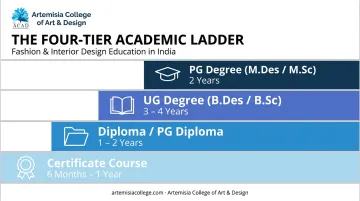
Both fields follow a similar academic ladder, so once you understand the structure, comparing specific programmes gets much easier.
- UG degree (B.Des/B.Sc): 3-4 years, most comprehensive route
- PG degree (M.Des/M.Sc): Typically 2 years for specialisation or a career switch
- Diploma/PG Diploma: 1-2 years, faster industry entry
- Certificate courses: 6 months to 1 year, skill-specific and quick
Eligibility for most UG programmes is simply 10+2 completion from any stream, Arts, Commerce, or Science. That's one reason both fields attract such a mixed crowd of students.
Fashion Design Course Options
A B.Des or B.Sc in Fashion Design typically covers:
- Textile design and fabric sourcing
- Garment construction and pattern making
- Trend forecasting and fashion illustration
- CAD tools for digital design
For students wanting faster industry entry, diploma and PG diploma routes in fashion design, fashion communication, or styling exist too. Artemisia College's programmes illustrate this ladder:
- 1-year Certificate in Fashion Design: illustration, pattern making, textiles, and hand-and-machine sewing
- 2-year Diploma: adds surface design, visual merchandising, entrepreneurship, and Adobe Illustrator training
Interior Design Course Options
A B.Des or B.Sc in Interior Design usually includes:
- Space planning and colour theory
- Furniture design and material studies
- Sustainability principles in design
- Software training in AutoCAD and SketchUp
Diploma and PG diploma options exist for those chasing quicker entry, along with short specialised courses like estimation and costing, or retail design. Artemisia's own programmes follow a similar path:
- Certificate in Interior Design (1 year): drafting, ergonomics, and anthropometrics
- Diploma (2 years): commercial and hospitality interiors, adding 3DS MAX and Photoshop to the software stack
Entrance routes worth researching:
- NIFT entrance exam
- NID's DAT
- UCEED (accepted by select IITs)
- Institute-level design aptitude tests
Many private colleges skip the exam route entirely and admit through merit plus a personal interview, so check each shortlisted college's specific process.
Fashion vs Interior Design: Which Course Is Right for You?
The core distinction is simple: fashion design centres on garments, textiles, and personal styling, while interior design centres on spaces, architecture-adjacent planning, and functional aesthetics.
The skills each demands differ too. Fashion leans on sketching ability and trend sensitivity. Interior design leans harder on spatial visualisation and technical software fluency, closer to how an architect thinks.
| Aspect | Fashion Design | Interior Design |
|---|---|---|
| Typical duration | 3-4 years (UG), 1-2 years (diploma) | 3-4 years (UG), 1-2 years (diploma) |
| Key software/tools | Adobe Illustrator, CAD | AutoCAD, SketchUp, 3DS MAX |
| Work environment | Studios, retail, export houses | Design firms, construction sites, client homes |
| Entry-level roles | Assistant designer, stylist | Junior interior designer, draftsperson |
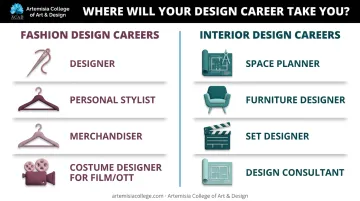
These entry-level roles open into longer career tracks that look quite different over time. Career paths after fashion design often include designer, personal stylist, merchandiser, or costume designer for film and OTT productions.
Career paths after interior design include space planner, furniture designer, set designer, or design consultant for residential and commercial clients. Artemisia College supports both tracks with placement help, linking graduates to labels like Anita Dongre and Tarun Tahiliani, or firms like Livspace and HomeLane.
Quick Self-Assessment
Ask yourself these questions before deciding:
- Do you get more excited flipping through a fashion lookbook or a home renovation reel?
- Would you rather sketch a garment on a body, or a floor plan on paper?
- Are you drawn to fast trend cycles, or long-term structural projects?
- Do you see yourself in a retail/export house, or on a construction site with clients?
- Does personal styling excite you more than furniture and lighting choices?
If you answered "garments" more often, fashion is your lane. If "spaces" kept coming up, interior design fits better.
Career Scope, Salary & Placements After Fashion & Interior Design Courses
Both fields open doors across a genuinely wide range of employers, not just design houses.
Fashion graduates get hired by:
- Retail brands and export houses
- Boutiques and personal styling businesses
- E-commerce fashion platforms
- Costume departments for film and OTT
Interior design graduates get hired by:
- Residential and commercial design firms
- Real estate developers
- Hospitality chains
- Retail store design teams
- Set design departments for film and OTT
What Can You Actually Earn?
Based on AmbitionBox salary data, here's what the ranges look like:
| Career Stage | Fashion Designer | Interior Designer |
|---|---|---|
| Fresher/Junior | ₹1.2-5.0 lakh/year | ₹1.2-4.5 lakh/year |
| Mid-level (3-4 years) | ₹2-8 lakh/year | ₹1.8-6.3 lakh/year |
| Senior/Experienced | ₹3.4-14 lakh/year | ₹6.8-7.5 lakh/year |
These figures come from AmbitionBox's salary reports for fashion and interior design roles, based on thousands of reported salaries. Note the wide spread: it depends heavily on city, employer, and portfolio strength.
Long-term scope backs both fields. India's home décor market alone is set to grow from $25.50 billion in 2024 to $40.80 billion by 2033, according to IBEF's 2025 industry analysis. Fashion's apparel market shows similar sustained growth.
Top employers actively recruit fresh graduates through campus placements: Livspace, HomeLane, and Godrej Interiors for interior design; Anita Dongre, Tarun Tahiliani, Raymond, and Arvind Fashions for fashion design.
How to Choose the Right Fashion or Interior Design College
Picking a college shapes your entire career trajectory, so shortlist carefully.
Check accreditation and curriculum depth. A UGC-recognised affiliation and a curriculum that covers both foundational theory and specialisation options (styling, commercial interiors, sustainable design) signals a serious programme.
Prioritise industry exposure. Look for:
- Live projects with real clients or brands
- Paid internships starting from the second year
- Studio, lab, or drafting-room infrastructure
- Faculty with active industry experience
Placement support decides your first job. A curriculum only gets you halfway there. Portfolio-building guidance, mock interviews, and mentorship through the hiring process often determine whether that first offer comes at all.
At Artemisia College, the placement cell guides students through portfolio finalisation, interview prep, and offer negotiation, turning curriculum into a career.
Why Choose Artemisia College for Fashion & Interior Design
Artemisia College of Art & Design runs industry-integrated Fashion Design and Interior Design programmes alongside Animation, Game Design, and Fine Arts. Students move through Certificate (1 year) and Diploma (2 year) tracks, with practical, studio-based learning rather than purely theoretical instruction.
What sets the experience apart is the dedicated Placement Cell, which works with students at every stage:
- Finalize portfolios and craft standout CVs
- Prepare for interviews through mock sessions and coaching
- Get one-on-one mentoring on which companies to target
- Navigate offer evaluation and salary negotiation with dedicated support
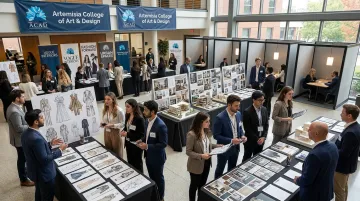
That guidance leads to real opportunities: Artemisia's industry partnerships bring hiring events to campus, including names like Livspace, HomeLane, Godrej Interiors, Anita Dongre, Tarun Tahiliani, Raymond, and Arvind Fashions.
As Director Nishant Goel puts it, the goal is transforming creative talent into industry-ready professionals, guiding students all the way from application to offer negotiation.
Ready to explore which path fits you? Book a counselling session with Artemisia College or call +91 7389650220 to discuss your options.
About Artemisia College of Art & Design
Fashion and interiors share a foundation year, which makes switching between them easier than most students expect. Artemisia College of Art & Design is run under Tryambakam Education Foundation and was started to build a job-oriented degree college offering high quality art and design education at low cost. Around 90% of the faculty come from the animation, game, interior design and fashion industries, with five to thirty-five years of experience behind them.
Fashion design runs at three levels: the Certificate in Fashion Design, the Diploma in Fashion Design and the four-year B.Design in Fashion Design. The college also awards B.Design degrees in Animation, Game Design and Interior Design, BFA and MFA routes in Painting and Sculpture, and a Certificate in Photography.
Tuition is kept low compared with similar programmes elsewhere and scholarships are offered to bright and needy students. You can check the current fee structure or apply through early admission if you would rather submit a portfolio than sit an entrance test.
Frequently Asked Questions
What are the fees for interior design courses in India?
Interior design fees in India vary widely, roughly ₹50,000 to ₹3-4 lakh per year, depending on city, college type, and course level. Contact your shortlisted colleges directly for exact fee structures, since amounts differ by institute.
Which course is best, fashion designing or interior designing?
There's no universally "better" course. It depends on whether you're drawn to garments and personal styling, or spaces and functional design. Use the comparison and self-assessment questions above to decide.
Which course is best to become a fashion designer?
A B.Des or B.Sc in Fashion Design offers the most comprehensive, industry-recognised path. A diploma works well as a faster alternative if you want focused, quicker skill-building.
Do interior designers earn a good salary?
Yes, interior designers in India earn competitive salaries that grow steadily with experience. Freshers start around ₹1.2-4.5 lakh/year, while senior professionals can earn ₹6.8-7.5 lakh/year or more with specialisation.
What is the eligibility criteria for fashion and interior design courses after 12th?
Most UG courses accept students from any stream, Arts, Commerce, or Science, with 10+2 completion. Some colleges also require entrance exams or a portfolio review.
Which entrance exams are required for fashion and interior design courses in India?
Common exams include the NIFT entrance test, NID's DAT, and UCEED for select IITs. Many private colleges skip exams entirely and admit through merit plus an interview instead.